Direct Answer
Section titled “Direct Answer”The HEAVY? checkpoint clears when the weighing plate displays a total of at least 200 kg (kilograms), not when you place 200 objects. Complete the Fuse progression first; once the plate reads >=200 kg the HEAVY? check marks complete and you proceed to the Percentage Pipe progression. Note: the live platform readout always outranks any fixed recipe or weight table — test combinations on your plate and follow the on-screen number rather than assuming a published recipe.
Quick Steps
Section titled “Quick Steps”- Bring heavy, stable items or a contained pile onto the plate until the live readout shows at least 200 kg.
- Prefer fewer large/stable objects or loaded containers — they stay on the plate more reliably than many loose items.
- If items fall or slide off, swap to heavier single objects or put items inside a crate/box to keep the mass contained.
- When the plate reaches >=200 kg the HEAVY? progression completes; then continue to the Percentage Pipe progression.
Prerequisites or What You Need
Section titled “Prerequisites or What You Need”- The Fuse progression must be completed first; players consistently report this is required.
- The goal is kilograms (>= 200 kg), not object count — check the live readout.
- Stable mass is as important as raw weight: contained piles or single heavy objects work best.
Full Explanation
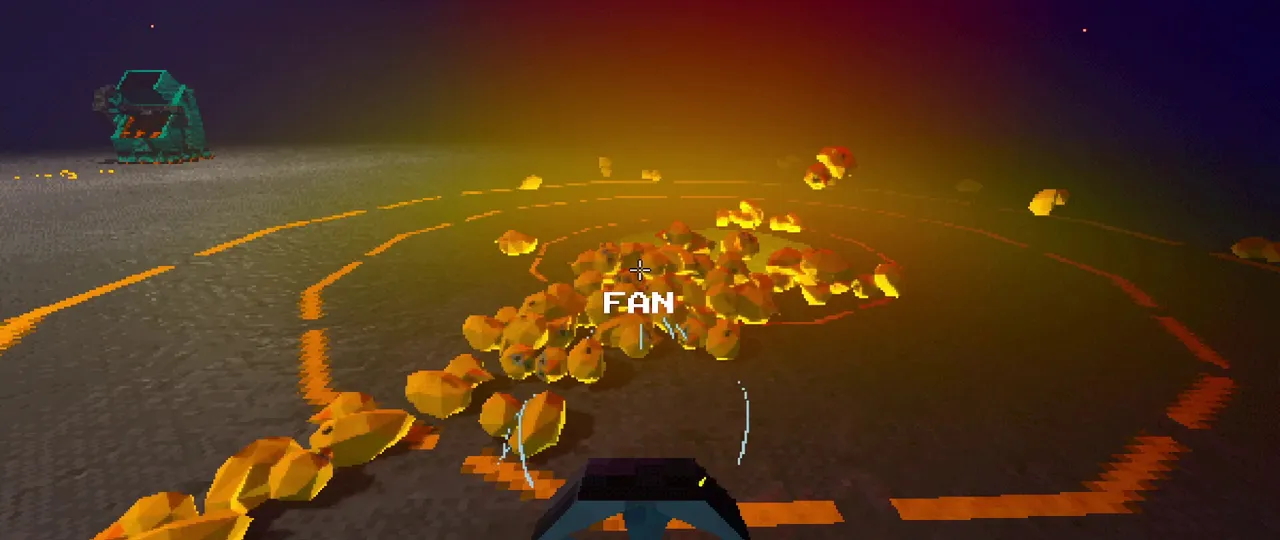
Section titled “Full Explanation”- Mass, not count: The plate checks kilograms. Many light items (for example, loose ducks) can be unstable and won’t reliably meet the threshold.
- Stability matters: A single stable heavy object, a loaded container, or a contained pile will hold weight on the plate far more reliably than tall, loose stacks.
- Community-reported workable item types: Gambling Crates, bumpers, remotes, loaded containers, wheeled carts, pistons, and industrial turbines are commonly used. These are community-observed options — not official requirements.
- Live test first: Use the plate’s readout to confirm your total. The live platform readout always beats any fixed recipe or table; treat community tables as starting points for testing, not definitive answers.
- What happens at 200 kg: when the plate reaches the 200 kg threshold the HEAVY? progression completes. After success, continue to the Percentage Pipe progression — see the Percentage Pipe Guide.
Community-tested / observed weights (not official)
Section titled “Community-tested / observed weights (not official)”The table below shows community-tested on-platform readings reported by players. These are observed values from community testing — not official publisher data. Always verify on your live plate.
| Item | Observed weight | Evidence label |
|---|---|---|
| Panel | 2 kg | community-tested / observed |
| Basketball Hoop | 3 kg | community-tested / observed |
| Piston | 5 kg | community-tested / observed |
| Wheeled Cart | 6 kg | community-tested / observed |
| Industrial Turbine / Fan (Level 3) | 8 kg | community-tested / observed |
Conflicting or state-dependent items (test these in-game)
Section titled “Conflicting or state-dependent items (test these in-game)”- Gambling Crate — community reports vary by opened/unopened state and contents (reports around ~5 kg and ~10 kg). Verify on your platform before relying on a single value.
- Bumper — community report around ~5 kg; verify on-plate.
- Remote — reported ~1 kg; too light for practical bulk load.
- Sponge — appears in secondary searches as a tool for wiping markings; community notes it is not a practical heavy load. Do not treat sponge as a confirmed weight.
Arithmetic examples (examples only)
Section titled “Arithmetic examples (examples only)”These are example combinations to illustrate the math — they are not the only valid routes. Any combination that reaches >=200 kg is acceptable; the plate’s live readout is final.
- 25 × Industrial Turbine (8 kg) = 200 kg
- 34 × Wheeled Cart (6 kg) = 204 kg
- 40 × Piston (5 kg) = 200 kg
- Mixed example: 20 Turbines (160) + 7 Carts (42) = 202 kg
Common Mistakes
Section titled “Common Mistakes”- Counting objects instead of checking mass. The display measures kilograms; 200 items ≠ 200 kg unless those items total that mass.
- Relying on a published table without testing on your plate first. Community numbers are observed values; the live readout can differ.
- Using many loose, tall stacks (especially ducks). They topple, slide, or get moved by physics and won’t reliably hold the required mass.
- Skipping the Fuse progression. Attempting the plate before finishing Fuse checks can block progression.
What To Do Next
Section titled “What To Do Next”- If the plate reliably reaches >=200 kg: proceed into the Percentage Pipe progression — see the Percentage Pipe Guide.
- If the mass keeps falling off: switch to fewer, heavier/stable items or use a crate/box to contain the load.
- If unsure which items to try first: test combinations from the community-tested table above and trust the live readout.
Already reached 200kg?
Section titled “Already reached 200kg?”If you’ve already hit 200 kg, that’s the progression checkpoint — not the endpoint. Proceed to the Percentage Pipe Guide for the next progression.
Related Guides
Section titled “Related Guides”- Before this step: the Fuse Box guide
- After this step: the Percentage Pipe Guide
Q: What is the heaviest item?
A: There is no single verified “heaviest item” published. Community testing has produced observed weights for several objects (see the community-tested table above). These readings are community-observed, not official — always confirm with the plate’s live readout.
Q: What should I use to reach 200 kg?
A: Prefer stable, heavy objects or loaded/contained piles. Use the community-tested table above as a starting point, but always confirm totals on the live readout; that readout outranks any fixed recipe.
Q: Are the item weights official?
A: No — the table is labeled community-tested / observed. These are player-reported on-platform readings and not publisher data. Verify combinations on your plate.
Q: What do I do after reaching 200 kg?
A: After the HEAVY? checkpoint completes, continue to the Percentage Pipe progression — see the Percentage Pipe Guide.